

Introduction
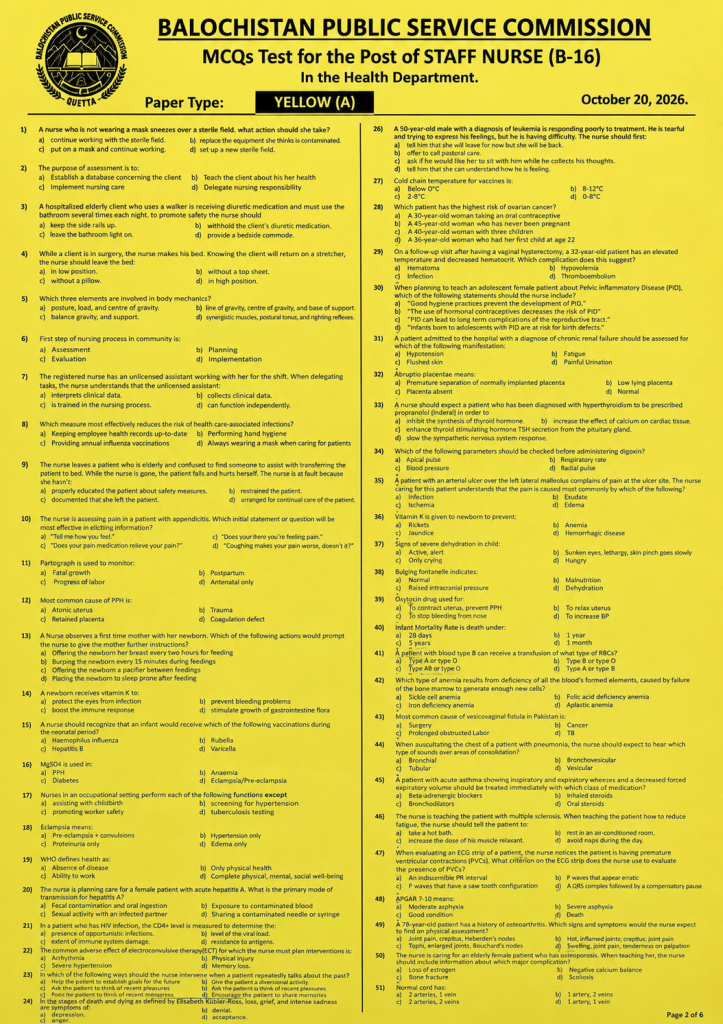
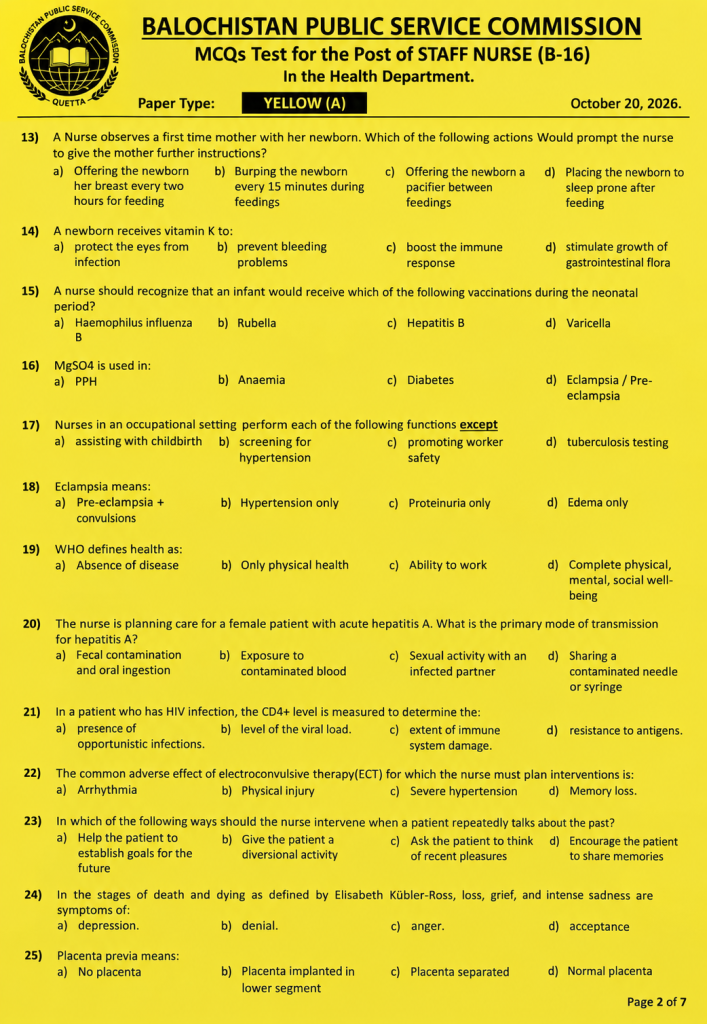
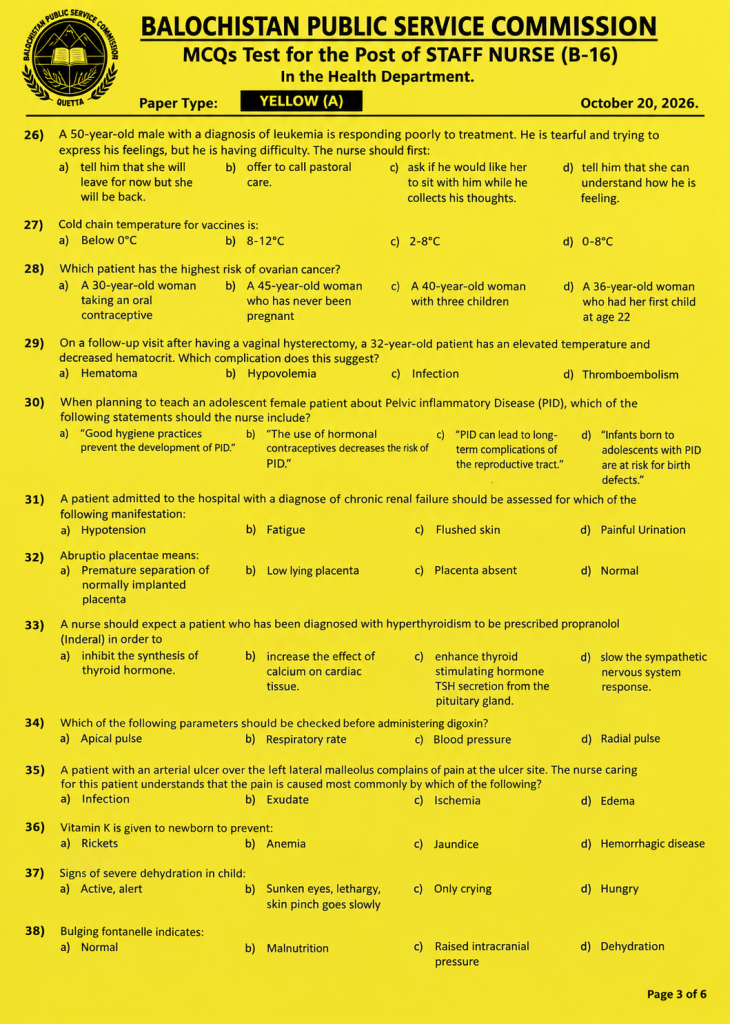
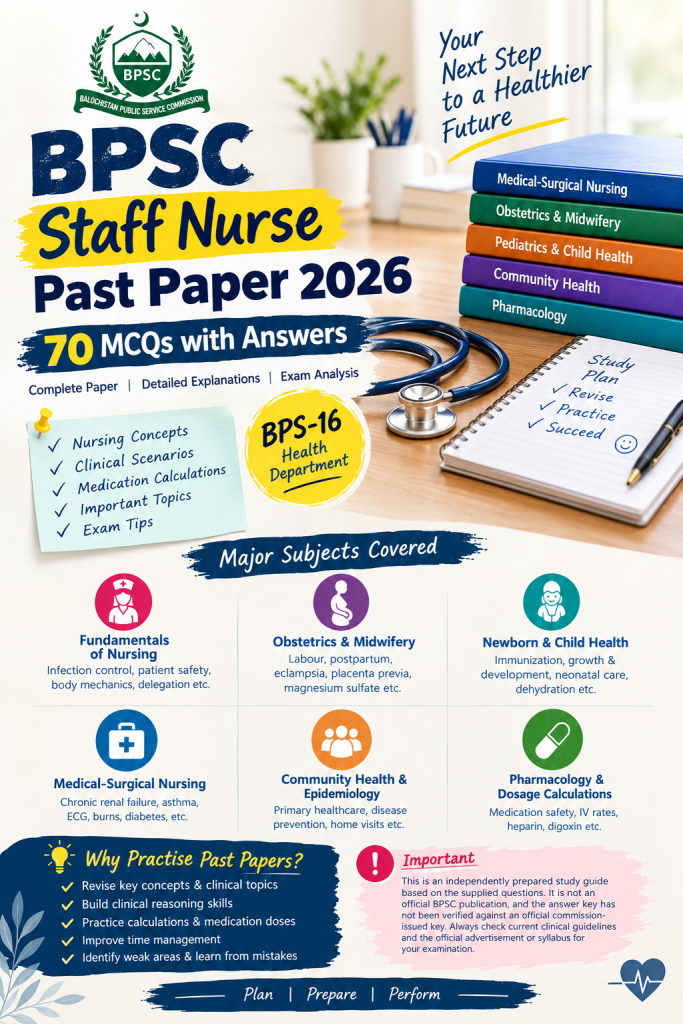
BPSC Staff Nurse Past Paper 2026: The Balochistan Public Service Commission (BPSC) Staff Nurse BPS-16 examination requires knowledge of nursing fundamentals, medical-surgical nursing, midwifery, child health, community health, pharmacology and patient safety. Practising previous-paper MCQs can help candidates identify important subjects, revise clinical concepts and improve their ability to answer multiple-choice questions.
This guide covers the supplied Staff Nurse paper attributed to October 20, 2026. It contains all 70 questions in a separate solved section, followed by explanations, a topic-wise analysis and a practical revision strategy for candidates preparing for upcoming BPSC Staff Nurse examinations.
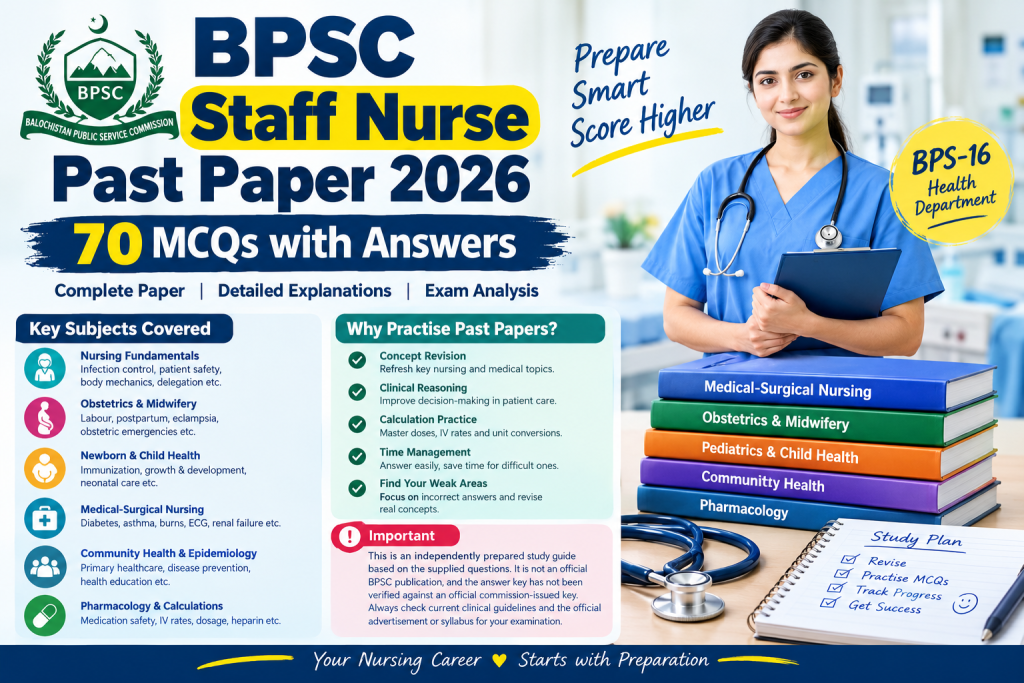
Important: This is an independently prepared study guide based on the supplied questions. It is not an official BPSC publication, and the answer key has not been verified against an official commission-issued key. Always check current clinical guidelines and the official advertisement or syllabus for your examination.
BPSC Staff Nurse Test: Paper Overview
| Detail | Information |
|---|---|
| Recruiting body | Balochistan Public Service Commission |
| Post | Staff Nurse |
| Grade | BPS-16 |
| Department | Health Department |
| Paper date printed on supplied paper | October 20, 2026 |
| Number of supplied MCQs | 70 |
| Paper type | Yellow (A) |
| Question format | Multiple-choice questions |
| Main preparation areas | Nursing fundamentals, medicine, obstetrics, paediatrics, community health and pharmacology |
The supplied paper contains a mixture of foundational nursing knowledge, clinical scenarios, medication calculations, maternal and newborn care, and common medical conditions. Candidates should practise both factual questions and clinical decision-making scenarios.
Why Should Candidates Practise Staff Nurse Past Papers?
Previous papers are useful for identifying the kinds of concepts that appear in nursing recruitment tests. They can also reveal areas where a candidate needs further revision.
The main benefits include:
- Concept revision: Review subjects such as infection control, fluid balance, obstetric emergencies and cardiovascular nursing.
- Clinical reasoning: Practise choosing the safest intervention in patient-care scenarios.
- Calculation practice: Revise IV infusion rates, medication doses and unit conversions.
- Time management: Learn to answer straightforward questions efficiently while allowing time for difficult ones.
- Error identification: Record incorrect answers and revise the underlying concept rather than memorising letters alone.
A previous paper should be used as a revision resource, not as a guarantee that the same questions will appear again.
Major Subjects Covered in the Supplied Paper
The questions span several important areas of nursing practice.
1. Fundamentals of Nursing
Questions address sterile fields, nursing assessment, body mechanics, delegation, patient falls, pain assessment, isolation and patient safety.
Candidates should revise the nursing process, standard precautions, scope of practice, safe transfers, therapeutic communication and prevention of healthcare-associated infections.
2. Obstetrics and Midwifery
The paper includes postpartum haemorrhage, eclampsia, placenta previa, abruptio placentae, labour monitoring, oxytocin, magnesium sulfate and vesicovaginal fistula.
Important revision areas include the stages of labour, obstetric emergencies, maternal assessment, postpartum monitoring and recognition of warning signs.
3. Newborn and Child Health
Questions cover vitamin K prophylaxis, newborn vaccination, APGAR scoring, umbilical cord anatomy, infant mortality, dehydration, fontanelle assessment and birth-weight milestones.
Candidates should review newborn resuscitation principles, immunisation schedules applicable in Pakistan, growth and development, neonatal infection and childhood danger signs.
4. Medical-Surgical Nursing
This area includes chronic renal failure, hyperthyroidism, digoxin, arterial ulcers, asthma, ECG interpretation, burns, thyroidectomy complications, appendicitis, Crohn’s disease and diabetes insipidus.
Revision should focus on assessment findings, complications, first-line nursing actions, medication monitoring and emergency recognition.
5. Community Health and Epidemiology
The paper tests the definition of health, epidemiology, home visits, occupational health, vaccine cold-chain temperatures and healthcare-associated infection prevention.
Candidates should also study primary healthcare, disease prevention, health education, screening and public-health indicators.
6. Pharmacology and Dosage Calculations
Several questions involve medication safety, including magnesium sulfate, oxytocin, propranolol, digoxin, misoprostol, heparin and IV fluid administration.
For calculation questions, always identify the prescribed dose, patient weight where applicable, total volume, infusion duration and drop factor before calculating the answer.
How to Use the Solved MCQs
The following section preserves the supplied paper’s question order and options wherever possible. The correct answer is provided with a brief explanation. Questions with ambiguous options or outdated terminology are specifically marked for careful review.
Solved BPSC Staff Nurse Past Paper 2026 — All 70 MCQs
Answer key with concise explanations. Clinical practice and current guidelines take precedence where a question is ambiguous or outdated.
Questions 1–10: Fundamentals of Nursing
1. A nurse without a mask sneezes over a sterile field. What should she do?
a) Continue working
b) Replace only the equipment she thinks is contaminated
c) Put on a mask and continue
d) Set up a new sterile field
Correct answer: D — Set up a new sterile field.
Explanation: Sneezing can contaminate the sterile field. Replace contaminated supplies and re-establish sterility before proceeding.
2. What is the primary purpose of nursing assessment?
a) Establish a database concerning the client
b) Teach the client about health
c) Implement nursing care
d) Delegate nursing responsibility
Correct answer: A — Establish a database concerning the client.
Explanation: Assessment collects subjective and objective data that guide nursing diagnoses, planning and interventions.
3. An elderly patient using a walker takes diuretics and needs the bathroom frequently at night. Which intervention best promotes safety?
a) Keep side rails up
b) Withhold the diuretic
c) Leave the bathroom light on
d) Provide a bedside commode
Correct answer: D — Provide a bedside commode.
Explanation: A bedside commode reduces nighttime walking and fall risk. Medication should not be withheld without an appropriate prescription.
4. A nurse prepares a bed for a patient returning from surgery on a stretcher. The bed should initially be left:
a) In the low position
b) Without a top sheet
c) Without a pillow
d) In the high position
Correct answer: D — In the high position.
Explanation: The bed is raised to facilitate transfer from the stretcher, then lowered and secured after the patient is safely transferred.
5. Which three elements are most closely associated with body mechanics?
a) Posture, load and centre of gravity
b) Line of gravity, centre of gravity and base of support
c) Balance, gravity and support
d) Synergistic muscles, postural tonus and righting reflexes
Best answer: B — Line of gravity, centre of gravity and base of support.
Explanation: These are fundamental biomechanical concepts used to maintain stability and balance. Option A also contains relevant body-mechanics concepts, so the question is not perfectly worded.
6. What is the first step of the nursing process in community health?
a) Assessment
b) Planning
c) Evaluation
d) Implementation
Correct answer: A — Assessment.
Explanation: Assessment identifies community needs, resources, risks and existing health problems.
7. An unlicensed nursing assistant is working with a registered nurse. Which task is generally appropriate to delegate?
a) Interpret clinical data
b) Collect clinical data
c) Perform the nursing process independently
d) Function independently as a nurse
Correct answer: B — Collect clinical data.
Explanation: An appropriately trained assistant may collect routine observations or measurements within their authorised scope. Assessment, interpretation and nursing judgement remain the responsibility of the qualified nurse.
8. Which measure most effectively reduces healthcare-associated infections?
a) Keeping employee health records updated
b) Performing hand hygiene
c) Providing annual influenza vaccinations
d) Always wearing a mask
Correct answer: B — Performing hand hygiene.
Explanation: Proper hand hygiene is a fundamental measure for reducing transmission of infectious organisms.
9. An elderly, confused patient falls while the nurse leaves to obtain transfer assistance. Which omission most directly contributed to the risk?
a) Failure to educate the patient
b) Failure to restrain the patient
c) Failure to document leaving
d) Failure to arrange appropriate supervision
Correct answer: D — Failure to arrange appropriate supervision.
Explanation: A high-risk patient should not be left without appropriate safeguards. Restraints are not a routine substitute for supervision and safe care.
10. Which initial question is most effective when assessing pain in a patient with appendicitis?
a) “Tell me how you feel.”
b) “Point to where you’re feeling pain.”
c) “Does your pain medication relieve your pain?”
d) “Coughing makes your pain worse, doesn’t it?”
Correct answer: A — “Tell me how you feel.”
Explanation: This open-ended question allows the patient to describe the pain without being led toward a particular answer. Location can then be assessed with a focused follow-up question.
Questions 11–20: Obstetrics, Newborn Care and Public Health
11. A partograph is used to monitor:
a) Fetal growth
b) Postpartum recovery
c) Progress of labour
d) Antenatal care only
Correct answer: C — Progress of labour.
Explanation: A partograph or labour-care record documents labour progress and relevant maternal and fetal observations.
12. What is the most common cause of postpartum haemorrhage (PPH)?
a) Uterine atony
b) Trauma
c) Retained placenta
d) Coagulation defect
Correct answer: A — Uterine atony.
Explanation: Failure of the uterus to contract effectively after delivery is the leading cause of PPH.
13. Which action by a first-time mother requires further instruction?
a) Offering breastfeeding approximately every two hours
b) Burping the newborn every 15 minutes during feeds
c) Offering a pacifier between feeds
d) Placing the newborn prone to sleep after feeding
Correct answer: D — Placing the newborn prone to sleep.
Explanation: Infants should generally be placed on their backs for every sleep on a firm, flat sleep surface. Prone positioning is not recommended for routine sleep.
14. Why is vitamin K administered to newborns?
a) Protect the eyes from infection
b) Prevent bleeding problems
c) Boost immune response
d) Stimulate gastrointestinal flora
Correct answer: B — Prevent bleeding problems.
Explanation: Newborns have low vitamin K stores and are at risk of vitamin K deficiency bleeding.
15. Which vaccine is commonly administered during the neonatal period?
a) Haemophilus influenzae type b
b) Rubella
c) Hepatitis B
d) Varicella
Correct answer: C — Hepatitis B.
Explanation: A hepatitis B birth dose is recommended promptly after birth under applicable immunisation guidance. The exact national schedule should be checked for the examination.
16. Magnesium sulfate is used primarily in which condition among the options?
a) PPH
b) Anaemia
c) Diabetes
d) Eclampsia/pre-eclampsia
Correct answer: D — Eclampsia/pre-eclampsia.
Explanation: Magnesium sulfate is used to prevent or treat seizures associated with severe pre-eclampsia and eclampsia.
17. Which function is generally not performed by an occupational health nurse?
a) Assisting with childbirth
b) Screening for hypertension
c) Promoting worker safety
d) Tuberculosis testing
Correct answer: A — Assisting with childbirth.
Explanation: Occupational health nursing focuses on workplace health, prevention, screening and employee safety.
18. Eclampsia means:
a) Pre-eclampsia with convulsions
b) Hypertension only
c) Proteinuria only
d) Oedema only
Correct answer: A — Pre-eclampsia with seizures.
Explanation: Eclampsia involves new-onset seizures associated with the pre-eclampsia spectrum that are not explained by another cause.
19. How does the World Health Organization define health?
a) Absence of disease
b) Physical health only
c) Ability to work
d) Complete physical, mental and social well-being
Correct answer: D — Complete physical, mental and social well-being.
Explanation: This is the well-known definition in the preamble to the WHO Constitution.
20. What is the primary route of transmission of hepatitis A?
a) Faecal contamination and oral ingestion
b) Contaminated blood exposure
c) Sexual activity alone
d) Sharing needles or syringes
Correct answer: A — Faecal–oral transmission.
Explanation: Hepatitis A typically spreads through contaminated food or water and close contact involving faecal–oral transmission.
Questions 21–30: Medical, Psychiatric and Reproductive Nursing
21. In a patient with HIV, the CD4+ count measures:
a) Presence of opportunistic infections
b) Viral load
c) Extent of immune system damage
d) Resistance to antigens
Correct answer: C — Extent of immune system damage.
Explanation: CD4 count helps assess immune function. HIV viral load is measured separately.
22. Which is a common adverse effect of electroconvulsive therapy (ECT)?
a) Arrhythmia
b) Physical injury
c) Severe hypertension
d) Memory loss
Correct answer: D — Memory loss.
Explanation: Temporary confusion and memory difficulties are recognised adverse effects of ECT.
23. A patient repeatedly talks about the past. How should the nurse intervene therapeutically?
a) Help the patient establish future goals
b) Provide a diversional activity
c) Ask the patient to think about recent pleasures
d) Encourage the patient to share memories
Correct answer: D — Encourage the patient to share memories.
Explanation: Listening and therapeutic communication can help the patient express feelings. Further intervention depends on the person’s emotional state and clinical needs.
24. In the Kübler-Ross model, loss, grief and intense sadness are associated with which stage?
a) Depression
b) Denial
c) Anger
d) Acceptance
Correct answer: A — Depression.
Explanation: Depression is one of the commonly described stages. These stages are not universal or necessarily experienced in a fixed order.
25. Placenta previa means:
a) No placenta
b) Placenta implanted in the lower uterine segment
c) Placenta separated prematurely
d) Normal placental implantation
Correct answer: B — Placenta implanted in the lower uterine segment.
Explanation: Placenta previa involves placental tissue overlying or near the internal cervical opening, depending on the diagnostic terminology used.
26. A 50-year-old patient with leukaemia is tearful and struggling to express his feelings. What should the nurse do first?
a) Leave and return later
b) Offer to call pastoral care
c) Ask whether he would like the nurse to sit with him while he gathers his thoughts
d) Tell him the nurse understands exactly how he feels
Correct answer: C — Offer a quiet, supportive presence.
Explanation: Therapeutic presence gives the patient time to express emotions without pressure or assumptions.
27. What is the standard refrigerator temperature range for most routine vaccines?
a) Below 0°C
b) 8–12°C
c) 2–8°C
d) 0–8°C
Correct answer: C — 2–8°C.
Explanation: Most routine vaccines are stored at +2°C to +8°C, subject to the specific product’s instructions.
World Health Organization
+1
28. Which patient has the highest ovarian cancer risk among the options?
a) A 30-year-old woman taking oral contraceptives
b) A 45-year-old woman who has never been pregnant
c) A 40-year-old woman with three children
d) A 36-year-old woman whose first child was born at age 22
Best answer: B — The 45-year-old woman who has never been pregnant.
Explanation: Older age and nulliparity are recognised risk factors. Oral contraceptive use and pregnancy are generally associated with reduced ovarian cancer risk.
29. Following vaginal hysterectomy, a patient has an elevated temperature and decreased haematocrit. Which complication is suggested?
a) Haematoma
b) Hypovolaemia
c) Infection
d) Thromboembolism
Best answer: A — Haematoma.
Explanation: A postoperative haematoma can cause blood loss and may be associated with fever. The findings are not diagnostic by themselves; bleeding, infection and other postoperative complications must be assessed.
30. Which statement should be included when teaching an adolescent about pelvic inflammatory disease (PID)?
a) Good hygiene alone prevents PID
b) Hormonal contraception eliminates PID risk
c) PID can cause long-term reproductive complications
d) PID causes birth defects in infants
Correct answer: C — PID can cause long-term reproductive complications.
Explanation: PID can cause chronic pelvic pain, infertility and an increased risk of ectopic pregnancy. Hormonal contraception does not eliminate the risk of sexually transmitted infections.
Questions 31–40: Medical-Surgical Nursing and Child Health
31. Which manifestation should a nurse expect in chronic renal failure?
a) Hypotension
b) Fatigue
c) Flushed skin
d) Painful urination
Correct answer: B — Fatigue.
Explanation: Anaemia, uraemia and other effects of chronic kidney disease can cause fatigue.
32. Abruptio placentae means:
a) Premature separation of a normally implanted placenta
b) Low-lying placenta
c) Absent placenta
d) Normal placental implantation
Correct answer: A — Premature separation of a normally implanted placenta.
Explanation: Placental abruption can cause maternal bleeding, abdominal pain and fetal compromise.
33. Why is propranolol prescribed to some patients with hyperthyroidism?
a) To inhibit thyroid hormone synthesis directly
b) To increase calcium effects on cardiac tissue
c) To increase pituitary TSH secretion
d) To reduce sympathetic symptoms
Correct answer: D — To reduce sympathetic symptoms.
Explanation: Propranolol helps control symptoms such as tachycardia, tremor and palpitations. It does not directly replace definitive treatment of the underlying thyroid disorder.
34. Which parameter should be checked before administering digoxin?
a) Apical pulse
b) Respiratory rate
c) Blood pressure
d) Radial pulse
Correct answer: A — Apical pulse.
Explanation: The apical pulse is assessed before administration. Follow the prescribed hold parameters and local protocol, and assess for toxicity and electrolyte abnormalities where indicated.
35. What most commonly causes pain in an arterial ulcer?
a) Infection
b) Exudate
c) Ischaemia
d) Oedema
Correct answer: C — Ischaemia.
Explanation: Reduced arterial blood supply causes tissue oxygen deprivation and pain.
36. Vitamin K is given to newborns to prevent:
a) Rickets
b) Anaemia
c) Jaundice
d) Haemorrhagic disease
Correct answer: D — Vitamin K deficiency bleeding.
Explanation: Vitamin K is necessary for the synthesis of several clotting factors.
37. Which combination suggests severe dehydration in a child?
a) Active and alert behaviour
b) Sunken eyes, lethargy and a slowly returning skin pinch
c) Crying only
d) Hunger
Best answer: B — Sunken eyes, lethargy and a slowly returning skin pinch.
Explanation: These can indicate significant dehydration. Clinical classification depends on the full assessment, including drinking ability, mental status and other signs.
38. A bulging fontanelle may indicate:
a) Normality in all circumstances
b) Malnutrition
c) Raised intracranial pressure
d) Dehydration
Correct answer: C — Raised intracranial pressure.
Explanation: A persistently bulging fontanelle when the infant is calm and upright is concerning and requires prompt clinical assessment.
39. Oxytocin is used to:
a) Contract the uterus and help prevent or treat PPH
b) Relax the uterus
c) Stop nasal bleeding
d) Increase blood pressure
Correct answer: A — Contract the uterus.
Explanation: Oxytocin stimulates uterine contractions and is used in labour management and postpartum haemorrhage prevention or treatment when indicated.
40. Infant mortality refers to deaths occurring before:
a) 28 days of age
b) One year of age
c) Five years of age
d) One month of age
Correct answer: B — One year of age.
Explanation: Infant mortality counts deaths among children younger than one year per 1,000 live births in the specified period. Neonatal mortality concerns the first 28 days.
Questions 41–50: Haematology, Respiratory and Critical Care
41. A patient with blood group B can generally receive which ABO-compatible red blood cells?
a) A or O
b) B or O
c) AB or O
d) A or B
Correct answer: B — Type B or type O.
Explanation: ABO compatibility is only one part of transfusion safety. Rh status, antibody screening and crossmatching must also be considered.
42. Which anaemia results from bone marrow failure affecting all formed blood elements?
a) Sickle cell anaemia
b) Folate deficiency anaemia
c) Iron deficiency anaemia
d) Aplastic anaemia
Correct answer: D — Aplastic anaemia.
Explanation: Aplastic anaemia can cause pancytopenia: reduced red cells, white cells and platelets.
43. What is a major traditional cause of vesicovaginal fistula in Pakistan?
a) Surgery
b) Cancer
c) Prolonged obstructed labour
d) Tuberculosis
Best answer: C — Prolonged obstructed labour.
Explanation: Prolonged obstructed labour can cause pressure-related tissue damage and fistula formation. Other causes include surgical injury.
44. Which breath sounds may be heard over an area of pulmonary consolidation?
a) Bronchial
b) Bronchovesicular
c) Tubular
d) Vesicular
Best answer: A — Bronchial.
Explanation: Consolidated lung tissue can transmit bronchial breath sounds into peripheral areas. “Tubular” is sometimes used descriptively, so the intended terminology should be checked against the source textbook.
45. Which medication class provides immediate relief in acute asthma with wheezing?
a) Beta-adrenergic blockers
b) Inhaled steroids alone
c) Bronchodilators
d) Oral steroids alone
Correct answer: C — Bronchodilators.
Explanation: Inhaled short-acting bronchodilators are commonly used for rapid relief. Severe attacks require prompt assessment and treatment under an appropriate acute-asthma protocol.
46. How should a patient with multiple sclerosis reduce fatigue?
a) Take a hot bath
b) Rest in an air-conditioned room
c) Increase muscle-relaxant dosage
d) Avoid daytime naps
Correct answer: B — Rest in a cool, air-conditioned environment.
Explanation: Heat can temporarily worsen multiple sclerosis symptoms. Energy conservation, rest and avoiding overheating may help.
47. Which ECG feature supports the presence of premature ventricular contractions (PVCs)?
a) An indiscernible PR interval
b) Erratic P waves
c) Saw-tooth P-wave configuration
d) A premature, abnormal QRS complex often followed by a compensatory pause
Correct answer: D — A premature abnormal QRS complex followed by a compensatory pause.
Explanation: PVCs usually originate in the ventricles, producing an early, wide and abnormal QRS complex, typically without a preceding normal P wave.
48. An APGAR score of 7–10 generally indicates:
a) Moderate asphyxia
b) Severe asphyxia
c) Good condition
d) Death
Correct answer: C — Good condition.
Explanation: A score of 7–10 generally indicates reassuring early adaptation. APGAR is assessed at one and five minutes and does not replace immediate resuscitation when needed.
49. Which findings are typical of osteoarthritis in an older adult?
a) Joint pain, crepitus and Heberden’s nodes
b) Hot, inflamed joints with crepitus
c) Tophi and enlarged joints
d) Swelling, pain and tenderness only
Correct answer: A — Joint pain, crepitus and Heberden’s nodes.
Explanation: Osteoarthritis commonly causes activity-related pain, crepitus and bony enlargement of distal finger joints.
50. What is a major complication of osteoporosis?
a) Loss of oestrogen
b) Negative calcium balance
c) Bone fracture
d) Scoliosis
Correct answer: C — Bone fracture.
Explanation: Osteoporosis reduces bone strength and increases the risk of vertebral, hip and other fragility fractures.
Questions 51–60: Anatomy, Gastrointestinal and Renal Nursing
51. A normal umbilical cord contains:
a) Two arteries and one vein
b) One artery and two veins
c) Two arteries and two veins
d) One artery and one vein
Correct answer: A — Two arteries and one vein.
Explanation: The umbilical arteries carry blood from the fetus toward the placenta, while the umbilical vein carries oxygenated blood toward the fetus.
52. What is the principal action of misoprostol in NSAID-associated peptic ulcer disease?
a) Reduces stomach volume
b) Increases gastric emptying speed
c) Protects the stomach lining
d) Increases lower oesophageal sphincter pressure
Correct answer: C — Protects the stomach lining.
Explanation: Misoprostol is a prostaglandin analogue that supports mucosal protection and reduces gastric acid secretion. It is contraindicated in pregnancy when used for NSAID-ulcer prevention because it can stimulate uterine contractions.
53. Which assessment is a priority in a patient with appendicitis?
a) Assess pain
b) Encourage clear fluids
c) Provide discharge teaching
d) Assess for signs and symptoms of peritonitis
Best answer: D — Assess for peritonitis.
Explanation: Perforation and peritonitis are serious complications. Monitor for worsening abdominal pain, guarding, rigidity, fever and clinical deterioration while arranging timely medical management.
54. Which description best characterises Crohn’s disease?
a) The entire large colon is always affected
b) Only the sigmoid colon is affected
c) Disease limited to mucosa and submucosa throughout the colon
d) It may affect the small intestine and colon through the full thickness of the bowel wall
Correct answer: D — It can affect the small intestine and colon transmurally.
Explanation: Crohn’s disease can affect any region of the gastrointestinal tract, often in discontinuous segments, and commonly causes transmural inflammation.
55. Which nursing diagnosis is most likely in acute diabetes insipidus?
a) Imbalanced nutrition: more than body requirements
b) Deficient fluid volume
c) Impaired gas exchange
d) Ineffective cardiopulmonary tissue perfusion
Correct answer: B — Deficient fluid volume.
Explanation: Diabetes insipidus causes excessive dilute urine output and can lead to dehydration and hypernatraemia.
56. After lithotripsy for renal calculi, which finding should be reported to the doctor?
a) Reduced fluid intake for one to two weeks
b) Fine, sand-like particles in the urine
c) Cloudy or foul-smelling urine
d) Bright pink urine within the first 24 hours
Best answer: C — Cloudy or foul-smelling urine.
Explanation: These findings can suggest infection. Passage of stone fragments and mild blood-tinged urine may occur after lithotripsy; heavy bleeding, fever, severe pain or difficulty urinating also warrant prompt assessment.
57. Neonatal sepsis occurs in a newborn during which broad age period?
a) One year
b) The first 28 days of life
c) Six months
d) Two years
Correct answer: B — The first 28 days of life.
Explanation: The neonatal period is the first 28 completed days after birth. Definitions of early- and late-onset neonatal sepsis vary by guideline.
58. A patient receives 500 mL of normal saline at 50 mL/hour. How long will infusion take?
a) 5 hours
b) 8 hours
c) 10 hours
d) 12 hours
Correct answer: C — 10 hours.
Calculation: \(500 \div 50 = 10\) hours.
59. Isolation is primarily used for a:
a) Healthy person
b) Infected person
c) Carrier only
d) Suspected person only
Best answer: B — Infected person.
Explanation: Isolation separates people with suspected or confirmed infectious disease when indicated to prevent transmission. Quarantine is used for exposed people who may become infectious.
60. Calculate the drip rate for 2,000 mL of IV fluid over five hours using a giving set delivering 10 drops/mL.
a) 63 drops/minute
b) 65 drops/minute
c) 67 drops/minute
d) 60 drops/minute
Correct answer: C — 67 drops/minute.
Calculation:
\[ \frac{2000 \times 10}{5 \times 60} =66.67 \approx 67 \]
Explanation: The result is rounded to the nearest whole drop. Electronic infusion pumps may instead be set in mL/hour.
Questions 61–70: Neonatal Care, Burns and Pharmacology
61. When is the APGAR score routinely assessed?
a) At one and five minutes after birth
b) Immediately after cord clamping only
c) After ten minutes only
d) After one hour
Correct answer: A — At one and five minutes after birth.
Explanation: Additional scoring may be performed at five-minute intervals when the score remains low, according to neonatal resuscitation guidance.
62. A patient has burns involving the entire back and the left arm. Using the adult Rule of Nines, what percentage of total body surface area is burned?
a) 9%
b) 18%
c) 27%
d) 36%
Correct answer: C — 27%.
Calculation: Entire back, approximately 18%; one entire arm, approximately 9%. Total = 27%.
Explanation: The adult Rule of Nines is an estimation method. Burn size and fluid management require proper clinical assessment; the rule is not directly applicable to infants.
63. In a patient with extensive full-thickness burns, which problem is an immediate priority?
a) Fluid and electrolyte status
b) Risk of infection
c) Body image
d) Pain level
Best answer: A — Fluid and electrolyte status.
Explanation: Major burns can cause severe fluid shifts and hypovolaemic shock. Airway and breathing assessment is also an immediate priority when inhalation injury is possible.
64. Following thyroidectomy, a patient develops peripheral numbness, tingling and muscle spasms. Which treatment should the nurse anticipate?
a) Thyroid hormone supplement
b) Antispasmodic
c) Barbiturate
d) IV calcium gluconate
Correct answer: D — IV calcium gluconate.
Explanation: These signs suggest hypocalcaemia, potentially caused by parathyroid injury or dysfunction after thyroid surgery. Urgent assessment and calcium treatment may be required.
65. A patient develops sweating, palpitations and tachycardia approximately 1½ hours after taking morning insulin. Which treatment is appropriate?
a) Check blood glucose and administer carbohydrate when indicated
b) Give nitroglycerin and obtain an ECG
c) Provide oxygen and pulse oximetry only
d) Restrict salt and administer diuretics
Correct answer: A — Check blood glucose and administer carbohydrate when indicated.
Explanation: These symptoms suggest hypoglycaemia. Check glucose promptly. If the patient is conscious and can swallow safely, give fast-acting carbohydrate; severe hypoglycaemia or impaired consciousness requires emergency treatment under protocol.
66. In acute renal failure, hypertonic glucose, insulin and sometimes sodium bicarbonate may be used to treat:
a) Hypernatraemia
b) Hypokalaemia
c) Hypercalcaemia
d) Hyperkalaemia
Correct answer: D — Hyperkalaemia.
Explanation: Insulin shifts potassium into cells, while glucose prevents treatment-induced hypoglycaemia. Sodium bicarbonate may be useful in selected patients, especially when metabolic acidosis is present. Severe hyperkalaemia requires urgent monitoring and a protocol-based approach.
67. Infant birth weight usually doubles by approximately:
a) One year
b) Nine months
c) Five to six months
d) Three months
Correct answer: C — Five to six months.
Explanation: Birth weight typically doubles by about four to six months and triples by approximately one year, although individual growth varies.
68. Epidemiology is the study of:
a) Epidemics only
b) Distribution and determinants of disease
c) Treatment only
d) Water only
Correct answer: B — Distribution and determinants of disease.
Explanation: Epidemiology examines the distribution and causes or determinants of health-related states in populations and applies this knowledge to disease control.
69. What is the main objective of a community health home visit?
a) Give medicine only
b) Collect money
c) Punish the family
d) Assess family health needs and provide appropriate care
Correct answer: D — Assess family health needs and provide appropriate care.
Explanation: Home visits support assessment, health education, preventive services, follow-up and continuity of care.
70. A 75 kg patient with pulmonary embolism is prescribed heparin at 20 units/kg/hour. How many units should be infused per hour?
a) 1,000 units
b) 1,200 units
c) 1,500 units
d) 1,700 units
Correct answer: C — 1,500 units/hour.
Calculation:
\[ 75 \times 20 = 1500 \]
Explanation: This gives the prescribed hourly dose. The actual infusion-pump setting in mL/hour requires the heparin concentration. Heparin is a high-alert medication and requires appropriate monitoring and independent checks according to local policy.
Quick Answer Key: All 70 MCQs
Use this table for rapid revision after attempting the questions independently.
1-D
2-A
3-D
4-D
5-B
6-A
7-B
8-B
9-D
10-A
11-C
12-A
13-D
14-B
15-C
16-D
17-A
18-A
19-D
20-A
21-C
22-D
23-D
24-A
25-B
26-C
27-C
28-B
29-A
30-C
31-B
32-A
33-D
34-A
35-C
36-D
37-B
38-C
39-A
40-B
41-B
42-D
43-C
44-A
45-C
46-B
47-D
48-C
49-A
50-C
51-A
52-C
53-D
54-D
55-B
56-C
57-B
58-C
59-B
60-C
61-A
62-C
63-A
64-D
65-A
66-D
67-C
68-B
69-D
70-C
This is a proposed answer key, not an official BPSC key. Questions 5, 10, 29, 37, 44, 53, 56 and other context-dependent items deserve particular attention when checking against the prescribed textbook.
Analysis of the BPSC Staff Nurse Past Paper
1. What does this paper suggest about the upcoming exam?
The supplied paper indicates that candidates should prepare broadly across nursing disciplines rather than concentrate exclusively on obstetrics or medical-surgical nursing. It includes both short factual questions and clinical scenarios requiring prioritisation, patient safety and pharmacological knowledge.
The official BPSC Staff Nurse syllabus available for Advertisement No. 03/2023 lists Medical-Surgical Nursing, Fundamentals of Nursing, Paediatric Nursing, Community Health Nursing, Psychiatric Nursing, Gynaecology and Obstetrics for female nurses, and Critical Care Nursing
This official syllabus is a useful reference, but candidates must check the advertisement and syllabus for their own upcoming recruitment cycle.
2. Topic-wise analysis
The following table groups the questions by their dominant subject for revision purposes. These are approximate study categories, not official BPSC weightings.
| Subject area | MCQ numbers | Priority |
|---|---|---|
| Fundamentals and nursing procedures | 1–10 | High |
| Obstetrics and maternal health | 11–18, 25, 29–30, 32, 39, 43 | Very high |
| Public health and epidemiology | 17, 19–20, 27, 40, 59, 68–69 | High |
| Psychiatric nursing | 22–24, 26 | Medium |
| Medical-surgical nursing | 31–35, 41–47, 49–56, 63–66 | Very high |
| Neonatal and paediatric nursing | 13–15, 36–38, 48, 51, 57, 61–62, 67 | Very high |
| Pharmacology and medication safety | 16, 33–36, 39, 45, 52, 64–66, 70 | Very high |
| Dosage calculations | 58, 60, 70 | High |
Categories overlap because several questions test more than one discipline.
3. Highest-priority concepts to revise
Obstetric emergencies
Revise uterine atony, postpartum haemorrhage, eclampsia, placenta previa, placental abruption, magnesium sulfate monitoring and oxytocin.
Newborn and paediatric nursing
Focus on vitamin K, APGAR, neonatal sepsis, dehydration, safe sleep, infant growth and the immunisation schedule.
Medical-surgical and critical care
Study ECG abnormalities, asthma, renal failure, potassium imbalance, burns, thyroidectomy complications, diabetes insipidus and gastrointestinal emergencies.
Drug calculations
Practise weight-based dosing, infusion rates, drop rates, unit conversions and medication safety checks.
Infection prevention and nursing fundamentals
Revise sterile technique, hand hygiene, delegation, fall prevention, isolation, assessment and therapeutic communication.
5. What should candidates expect in the upcoming examination?
No reliable prediction of exact questions or marks distribution can be made from one paper. However, the supplied questions provide a practical revision checklist.
- Prepare every major subject in the official syllabus.
- Practise scenario-based questions involving the first nursing action and the safest intervention.
- Review drug indications, contraindications, adverse effects and monitoring.
- Memorise standard definitions, clinical milestones and essential nursing procedures.
- Solve calculation questions repeatedly without relying on answer memorisation.
- Use current national guidance for immunisation and current clinical guidelines for emergency management.
The strongest preparation method is to understand why each answer is correct and why the other options are inappropriate.
Frequently Asked Questions
1. Where can I find the BPSC Staff Nurse past paper with answers?
This article provides all 70 questions from the supplied paper, with a proposed answer key and brief explanations. Verify disputed questions against authoritative nursing textbooks and any official answer key released by BPSC.
2. What subjects should I study for the BPSC Staff Nurse BPS-16 test?
The official BPSC syllabus for the referenced 2023 advertisement includes Medical-Surgical Nursing, Fundamentals of Nursing, Paediatric Nursing, Community Health Nursing, Psychiatric Nursing, relevant Obstetrics and Gynaecology content, and Critical Care Nursing. Check the syllabus for the current recruitment cycle before finalising your study plan.
3. Are these 70 answers officially verified?
No. They are proposed answers prepared for educational revision. Some questions have ambiguous wording or depend on the clinical context, so the key should not be represented as an official BPSC answer key.
4. Which topics deserve the most revision time?
Prioritise obstetric emergencies, newborn care, medical-surgical nursing, pharmacology, infection prevention and dosage calculations. Also prepare psychiatric and community health nursing because they are included in the official syllabus.
5. How should I prepare for nursing MCQs?
Study the underlying concept, answer questions without looking at the key, record mistakes and repeat incorrect questions after reviewing the relevant topic. Practise clinical scenarios and calculations alongside factual recall.
6. What is the normal vaccine cold-chain temperature?
Most routine vaccines are stored at 2°C to 8°C, although product-specific instructions and approved exceptions must be considered.
7. Is memorising past papers enough to pass?
No. Past papers help with revision, but memorising their answers alone leaves gaps in clinical reasoning and subjects that may appear in a different format. Use them alongside the official syllabus and recommended textbooks.
8. What is the best way to revise during the final week?
Review incorrect MCQs, high-priority clinical concepts, drug calculations, obstetric emergencies, newborn care and infection-control principles. Complete timed practice sessions and protect sufficient time for sleep and rest.
Conclusion
The BPSC Staff Nurse Past Paper 2026 provides a useful starting point for revising nursing fundamentals, obstetrics, paediatrics, community health, pharmacology and medical-surgical nursing. The 70 solved MCQs in this guide can help candidates identify knowledge gaps and practise clinical reasoning.
For the upcoming BPSC Staff Nurse BPS-16 examination, use this paper as one revision resource, follow the current official syllabus, and confirm clinical facts against authoritative references. Do not treat a predicted answer key or a previous paper as a guarantee of future examination content.