

In today’s digital world, you can start doing simple online tasks for money and turn spare minutes into reliable extra income. Whether you’re a student, freelancer, parent, or anyone who wants flexible work-from-home options, task-based online jobs let people earn without formal qualifications or long commitments.
This practical, SEO-optimized guide shows what these tasks look like, which platforms to try, how to get paid, and safety steps to avoid scams — so you can start testing a platform today and see what really pays.
What Are Online Tasks for Money?
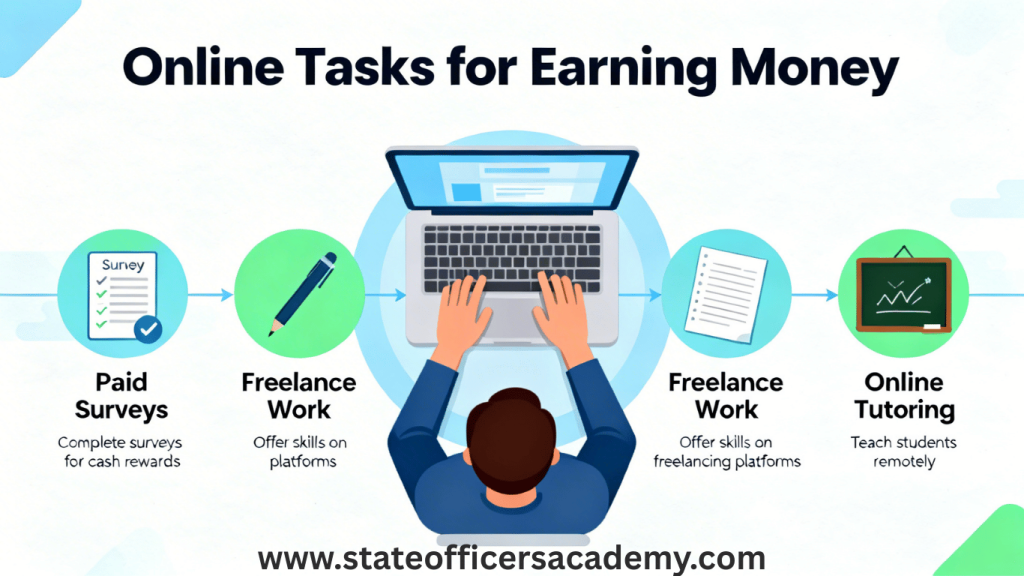
Online tasks are short, focused jobs you complete on the internet in exchange for small payments. They’re ideal for people who want flexible ways to earn money in spare moments — students, parents, retirees, or anyone looking to top up income.
- Answering surveys — Share your opinions on products or services; most surveys take 5–20 minutes and typically pay from a few cents up to a few dollars depending on length and platform.
- Watching videos and ads — View short clips or ads and give feedback; these tasks usually last a few minutes and pay small amounts per view.
- Testing apps or websites — Try an app or site for 10–30 minutes, report bugs and usability issues; testers often earn higher per-task rates than basic microtasks.
- Data entry and categorization — Clean, tag, or categorize data sets; tasks vary in length but reward accuracy and speed.
- Editing or creating small content — Write short descriptions, correct text, or create micro-content; payouts depend on complexity and skill required.
- Playing games or downloading apps — Try game levels or install apps to unlock offers; these are often promotional tasks that pay when you complete specific in-app goals.
- Microtasks like tagging images or verifying leads — Very small chores that take a minute or two apiece and are paid per task; doing many efficiently can add up over time.
Most platforms pay per task rather than a salary, and common payout methods include PayPal, mobile wallets, bank transfer, or gift cards. Payment amounts vary by task and platform — expect anything from a few cents to several dollars per task; testing and specialized skills usually pay more. Track how many minutes each task takes to calculate a realistic hourly rate before committing your time.
Popular Legitimate Platforms to Earn by Completing Tasks
Below are well-known platforms and marketplaces where people can find task-based jobs and start earning money. I grouped them by the type of work to help you choose the best fit for your skills and schedule.
1. Remotasks (Microtasks & Data Annotation)
Remotasks is a platform focused on microtasks such as image labeling, audio transcription, and data annotation. It’s best for workers who enjoy repetitive, detail-oriented tasks and want project-based work. Pros: regular task flow, good for building experience with data projects; Cons: pay per task varies and can be low for simple chores. Typical payout behavior: tasks are paid per piece and many users withdraw via common payment methods after meeting payout thresholds. Confirm current payout schedule and supported payment methods on the platform website before signing up.
2. Paidwork (Surveys, Videos & Casual Tasks)
Paidwork lists a variety of ways to get paid — from watching videos and playing games to completing surveys and small tasks. It’s a good choice if you prefer simple tasks that take only a few minutes. Pros: easy-to-start tasks and frequent short assignments; Cons: per-task pay is often lower, so you’ll need volume to earn meaningful amounts. Check whether Paidwork supports your country and which payment options are available.
3. Clickworker (Writing, Categorization & Micro Jobs)
Clickworker offers a mix of tasks such as writing, proofreading, web categorization, surveys, and more, and pays through PayPal and other methods depending on your location. Best for people who can write or proofread quickly and want a variety of job types. Pros: variety of task categories and higher-paying assignments for skilled work; Cons: some tests/assessments are required to unlock higher-paying jobs.
4. ViralTasks (Research, Editing & Lead Verification)
ViralTasks features tasks like research, video editing, lead verification, and content creation, often aimed at short freelance-style projects. Best for those with specific skills (editing, research) who want slightly larger payouts per project. Pros: higher rewards for skilled projects; Cons: availability can be project-dependent and competitive.
5. Micro Jobs Platforms (e.g., SideGg) — Marketplaces for Small Gigs
Micro job marketplaces list many small gig tasks — from data entry to quick surveys — letting you pick what interests you and work across multiple projects. These websites aggregate jobs from various requesters, so you can often find consistent work if you’re persistent. Pros: flexibility and variety; Cons: quality and pay rate vary widely across listings.
How to choose among these platforms:
- Match the platform to your skills — pick Remotasks or microtask sites for data or audio work, Clickworker for writing/categorization, and Paidwork for very short tasks.
- Check payout thresholds, payment methods, and whether the platform has a mobile app or website you can use on the go.
- Read recent user reviews and search for payment proof or community feedback to verify reliability.
Overall, platforms and websites differ in payment schedules, available jobs, and country coverage. Test one or two platforms to see which fits your schedule and pays fairly for your effort.
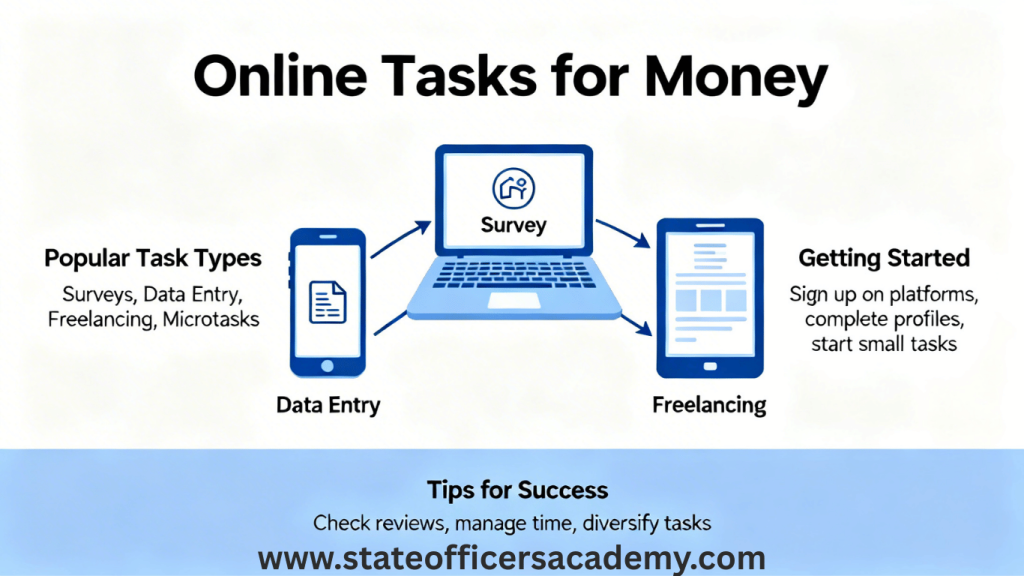
How to Get Started With Online Tasks

Here’s a simple, practical step-by-step guide to create an account, find tasks, and start earning money today — plus small routines that help you maximize your time.
- Sign Up for a Platform – Create an account on the platform or app you chose (most sites are free). Use a dedicated email for task sites, enable two-factor authentication if available, and complete any required verification to ensure you can withdraw later.
- Complete Profile / Assessments – Fill out your profile and take any qualification tests so the platform can match you with higher-paying tasks. Accurate skills and location info unlock more relevant jobs and improve your chances to get paid.
- Browse Available Tasks – Filter tasks by type (surveys, microtasks, app testing, writing) and estimated time. Typical simple tasks take 2–10 minutes; testing or transcription can take 10–30 minutes but often pay more.
- Complete Tasks – Read instructions carefully, submit work on time, and aim for accuracy. Quick tip: do a few practice tasks to learn quality standards and reduce rejections. Track how many minutes each task takes to measure your real hourly rate.
- Earn & Withdraw – Tasks are usually approved after review; once you reach the payout threshold you can withdraw via PayPal, bank transfer, or other options the platform supports. Check processing times — some platforms take several days to clear payments.
Tips for Increasing Earnings:
- Choose tasks that match your interests and skills — skilled tasks (editing, audio transcription, app testing) typically pay more than basic microtasks.
- Complete tasks quickly and accurately to build a good reputation and unlock higher-paying jobs. Keep a short log (platform, task type, minutes, pay) to calculate which tasks actually help you earn money.
- Use multiple platforms and set a simple schedule — for example, 30–60 minutes in the morning and 30 minutes in the evening — to increase available tasks and smooth out slow periods.
Quick starter checklist: create an account, verify email, set up your payout method, take qualification tests, and try 3–5 different task types to see which fits your routine and pays best. If you have questions or want feedback on a platform, look for community reviews or forums before investing much time.
Realistic Expectations: What You Can Expect to Earn
Online task work is usually not a substitute for full-time income, but it can reliably provide extra pocket money or side income if you approach it strategically. Earnings vary widely by platform, task type, skill level, and the time you put in.
Typical example scenarios (estimates; results vary):
- Low effort, casual use (10–20 minutes/day): $10–$50 per month — mostly small surveys, watching videos, or tiny microtasks.
- Moderate effort (30–60 minutes/day): $50–$200 per month — mixing surveys, some data tasks, and occasional app testing or content microjobs.
- Higher effort / skilled tasks (1–3 hours/day): $200–$600+ per month — more time spent on transcription, thorough app/website testing, editing, or specialized microprojects that pay better.
Earnings depend on:
- Time you invest — more minutes and consistent daily work generally increase monthly totals.
- Types of tasks available — surveys and watching videos usually pay less than specialized testing or transcription.
- Your skill level — better writing, audio, or testing skills unlock higher-paying jobs and projects.
- Platform payout rates — different websites and marketplaces set different prices and payout thresholds.
Practical tip: Track how many minutes a task takes and the payout amount to calculate your real hourly rate. If a task pays $0.50 and takes 5 minutes, your effective rate is $6/hour; if it takes much time for little money, consider switching to higher-paying types of tasks. Over time, moving from low-pay microtasks to skill-based jobs or longer projects is the best way to increase how much money you earn from these platforms.
How to Spot and Avoid Online Task Scams
As interest in earning money from online tasks grows, scammers have also increased efforts to exploit people looking for flexible work. There are documented reports and consumer warnings about fraudulent task offers and fake marketplaces that ask for upfront fees or never deliver promised payment. Be cautious and treat any unsolicited offer with skepticism.

Red Flags of Scams:
- Requests to pay money before working — Legitimate task platforms do not ask you to pay to start getting jobs or to unlock higher-paying tasks.
- Promises of high earnings for little effort — Offers that guarantee large rewards with minimal time are likely too good to be true.
- Asking for personal or financial information upfront — Don’t share bank account numbers, Social Security numbers, or copies of ID unless you’re using a verified, reputable platform that requires identity verification for legitimate payout reasons.
- Unsolicited contact via WhatsApp, social media DMs, or random email offers — reputable platforms usually recruit through their website or established app channels, not unexpected direct messages.
Safety Tips:
- Research the platform: check the official website, read the terms of service and privacy policy, and search for independent reviews and payment proof on forums or social communities.
- Verify domain age and contact info — brand-new websites with little history are higher risk.
- Avoid offers that require upfront payment, buying a “training package,” or any investment to get started.
- Protect your privacy: use a dedicated email for task sites, enable two-factor authentication when available, and never provide sensitive financial information unless the platform is verified and you’re setting up a legitimate payout method.
- Look for platform transparency about payment methods and payout thresholds — platforms with clear payout records and visible payment proofs are safer choices.
- If an offer pressures you to act fast or insists on private chat for onboarding, step back and verify independently.
Quick vetting checklist before you accept an offer:
- Is there a clear payment method and payout schedule listed?
- Are there user reviews or community feedback confirming real payouts?
- Does the site require payment to start? If yes, do not proceed.
- Does the platform ask for unnecessary personal info up front?
- Is communication coming from an official website or app, not an unsolicited message?
If you suspect fraud, report the offer to your local consumer protection agency and the platform (if impersonation is involved). When in doubt, ask the community for feedback before investing time or money — trusted forums and review sites can help people spot bad offers and identify reputable platforms for testing and rewards.
Conclusion
Online tasks for money remain one of the most flexible ways to earn extra income in today’s world — ideal for students, people seeking side jobs, or anyone who wants to work from home on a flexible schedule. Choose reputable platforms and focus on task types that match your skills (surveys, testing, data work, or audio transcription) to get the best results.
Practical next steps:
- Try one platform this week and complete 3–5 tasks to measure how many minutes they take and how much you earn.
- Track your results (platform, task type, minutes, payment) to calculate your true hourly rate and decide which tasks or projects are worth your time.
- Scale up the platforms and task types that pay fairly; consider moving from basic microtasks to higher-paying projects as your experience and feedback improve.
Resources & community: visit reputable websites and forums for platform reviews and payment proof, ask questions in community groups, and share opinion and feedback about your experiences — that helps others spot good opportunities and avoid bad offers. If you want, start with surveys and simple testing jobs, then branch into specialized tasks (audio, data, or content projects) to increase your earnings over time.
Remember: treat every offer with healthy skepticism, prioritize your privacy, and aim for steady gains rather than quick wins. Ready to get started? Pick a platform, set a short schedule (15–60 minutes/day), and begin testing — then come back and share your insights with the community.

